
The Mystery Is the System: Religious Trauma Through the Lens of “Wake Up Dead Man”
There’s a particular ache that comes when the place meant to keep you safe becomes the place that wounds you. Religious trauma is not only about doctrine gone wrong; it’s about the slow erosion of trust, the shrinking of autonomy, and the way authority can be wielded to silence and shame. The new Benoit Blanc mystery Wake Up Dead Man over on Netflix stages a gothic whodunnit inside a church community, and the film’s plot—centered on a controversial priest, a morally compromised monsignor, and a parish fractured by secrets—gives us a cinematic mirror for those dynamics.
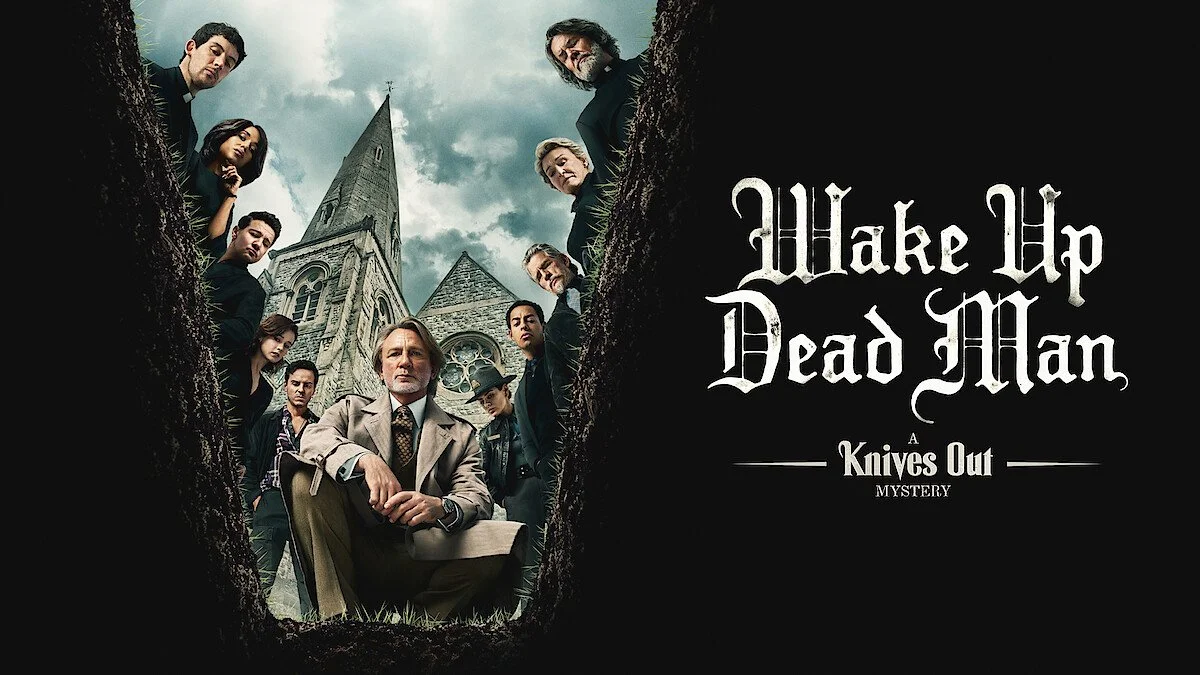
PC @ Netflix
It is a story about power—who holds it, who is harmed by it, and who finally decides to walk away. Watching the star-studded movie, I couldn’t help noticing how closely its themes reflect the lived realities of religious trauma survivors. The film may be wrapped in humor and intrigue, but beneath the twists lies a familiar pang: the disorientation of discovering that the people and institutions you trusted were never what they claimed to be.
Religious trauma often begins with that same unraveling. A moment when the story you were handed no longer matches the truth you’re living. A moment when the “mystery” isn’t a puzzle to solve but a system to survive.
Let’s explore a few of the film’s themes*—authority, autonomy, power structures, and the long shadow of betrayal—and how they echo the experiences of those healing from spiritual and religious harm.
*Content note: This discussion includes plot details. The film is rated PG‑13, and its themes and tone may or may not align with your personal viewing preferences.
The Illusion of Authority
In Wake Up Dead Man, the central conflict revolves around a charismatic leader whose influence shapes the entire group. His confidence is magnetic, his certainty unwavering, and his followers orbit him as if he were the sun itself. The film slowly reveals how this authority is constructed—not through wisdom or moral integrity, but through manipulation, secrecy, and the careful crafting of an image.
For many who grew up in high‑control religious environments, this dynamic feels painfully familiar. Authority was often presented as divinely ordained, unquestionable, and absolute. Leaders were elevated beyond accountability, and dissent was framed as rebellion, sin, or spiritual immaturity.
The movie’s unraveling of false authority parallels the moment survivors begin to question the narratives they were taught. It’s destabilizing. It’s frightening. And it’s the first step toward reclaiming one’s own voice and embracing truth or healing.
What Religious Trauma Looks Like On-Screen
Religious trauma often arrives as a slow, cumulative violence: a sermon that becomes a verdict, a leader’s charisma that masks coercion, rituals that demand compliance rather than invite meaning. In Wake Up Dead Man, many of those elements are staged as plot devices—charismatic authority, a parish dependent on a single donor, and a leader whose conservatism masks cruelty. The film asks us to watch how ritual and spectacle can be weaponized and how forgiveness can be demanded as a performance rather than offered as a gift.
Power Structures Built on Fear
One of the film’s most striking elements is how the group’s internal hierarchy functions. Everyone knows their place. Everyone knows the cost of stepping out of line. The leader’s approval becomes a currency, and fear becomes the glue that holds the system together.
Religious trauma often grows in similar soil. Fear—of punishment, of exclusion, of divine wrath—is used to maintain control. People learn to silence their doubts, suppress their needs, and contort themselves into whatever shape keeps them safe.
In the movie, we watch characters bend themselves around the leader’s expectations, even when it harms them. That’s the heartbreaking reality of trauma bonding: when survival requires loyalty to the very system causing the harm.
The Cost of Lost Autonomy
A pivotal moment in Wake Up Dead Man occurs when a character realizes they’ve been living someone else’s story. Their choices, relationships, and even their identity have been shaped by the group’s expectations. The realization is both liberating and devastating.
Religious trauma survivors often describe a similar awakening. Autonomy—the ability to choose, to question, to say no—was not encouraged. Instead, obedience was framed as virtue. Submission was spiritualized. Individuality was labeled selfish.
Reclaiming autonomy after religious trauma is not a single moment but a long, tender process. It involves learning to trust your own instincts, honoring your boundaries, and discovering who you are outside the roles you were assigned.
The film captures this beautifully: the quiet courage it takes to step out of a system that has defined your entire world.
The Shattering of Betrayal
One of the emotional anchors of the movie is the sense of betrayal that surfaces as the truth comes to light. Characters who once felt safe suddenly realize they were misled. Their trust was exploited. Their loyalty was weaponized.
Religious trauma carries that same sting. Betrayal by a spiritual leader or community cuts deeply because it violates not just trust but identity, belonging, and meaning. It’s not simply that someone lied—it’s that the lie shaped your life.
The film doesn’t rush past this pain, and neither should we. Naming betrayal is part of healing. It allows survivors to grieve what was lost and acknowledge the harm that was done.
Reclaiming the Narrative
What ultimately drives the story forward is the characters’ decision to stop participating in the illusion. They begin telling the truth—to themselves, to each other, and eventually to the world. The unraveling of the system doesn’t happen through violence or revenge but through clarity.
This is where the film and the journey of religious trauma survivors converge most powerfully.
Healing is not about destroying the past. It’s about reclaiming your narrative from the structures that once controlled it.
The characters in Wake Up Dead Man don’t become heroes by solving the mystery. They become heroes by refusing to be complicit in the system that created it.
Some Interesting Thoughts From Wake Up Dead Man
Staged Piety:
The movie’s use of spectacle - rituals performed for effect - shows how institutions can turn spiritual practices into tools of control. When forgiveness is demanded publicly, it ceases to be restorative and becomes punitive.
Moral Coercion:
Monsignor Wick’s grip on the parish shows how moral authority can be weaponized to shame dissenters and silence critics, a dynamic familiar to survivors of spiritual abuse.
The Manufactured Miracle:
The film’s staged “resurrection” and Easter timing expose how easily spiritual language can be weaponized to control a narrative. Instead of inviting genuine transformation, the spectacle becomes a tool for coercion reflecting how, in religiously traumatic environments, people are pressured to perform repentance, forgiveness, or redemption on someone else’s timeline.
The Confession Economy:
The film highlights how confession becomes a kind of currency - something extracted, traded, or weaponized rather than freely offered. Characters are pushed to reveal truths not for healing but to serve someone else’s agenda. This parallels the experience of many survivors of religious trauma, where confession is demanded as proof of loyalty, purity, or submission. In both the film and harmful religious systems, confession stops being a path to restoration and becomes a mechanism of control.
The False Prophet Archetype:
The story plays with the trope of the charismatic spiritual figure whose authority goes unquestioned until the entire structure collapses. The film uses this to explore how communities can be groomed to trust the wrong person, excuse harm, and reinterpret red flags as virtues. It mirrors the dynamics of religious trauma, where the “anointed leader” becomes untouchable, and dissent is framed as betrayal rather than discernment.
A Final Note
Watching a film like Wake Up Dead Man can feel like a form of witnessing: we see the contours of spiritual harm and are invited to name it. For those who have lived it, the recognition can be both validating and painful. For those who haven’t, the film offers a cautionary tale about the seductions of authority, moral superiority and the ethical imperative to center human dignity over institutional reputation. If religious communities want to be places of safety, they must be willing to cede power, listen to the wounded, and make structural changes that prioritize care over image. That is the hard, necessary work both the film and survivors ask of us.
If the film’s value is its willingness to interrogate faith, its real power is in showing how truth-telling and accountability are necessary first steps toward repair. For survivors of religious trauma, healing rarely looks like a tidy cinematic resolution. It’s messy and includes boundary-setting, grief for what was lost, and the slow rebuilding of a moral compass outside the institution that harmed you. Wake Up Dead Man gestures at that complexity—exposure of wrongdoing is necessary but not sufficient; the community must also change the structures that allowed harm to flourish.
As the movie concluded, I was struck by how honestly it captured the human tension of holding doubt, belief, and curiosity all at once. Wake Up Dead Man captures the moment we find ourselves in—a faith era marked by intensity, reckoning, and a refusal to look away from harm. It names the systemic wrongs we’re finally confronting, yet still leaves room for a genuine hunger for the sacred, and a faith experience that is unmanufactured and true.
This article is not intended to treat or diagnose any condition.
Rebekah is not a licensed therapist or clinician. Any thoughts, opinions or resources given on this site are strictly her own observation and insights based on personal experiences and study. It should in no way take the place of professional assistance.