
Millstones and Mic Drops: What does comedy reveal about our culture?
Why do we laugh at certain jokes and not others?
The other day I scrolled through a comedian’s reel and what he said made me stop and rewatch just to make sure. He was riffing on his sisters’ parenting—gentle parenting, emotional coaching, the kind of responsive care that looks different from family tradition. He opened with, “All my siblings’ kids are bad. No one hits them anymore. No one spanks the kids.” The sketch ended with, “Dude, I will hit a child, bro. I will hit a child.” The audience laughed and applauded.
This man is a Christian comedian, a public figure, with millions of followers and a career that started on church stages. That context matters. What we laugh at today reveals what we accepted yesterday.
Why I Responded and Exactly What I Said
I don’t usually wade into the social media comment section. But this one lit my momma‑bear instinct. I had to speak—for the sake of the children. Here’s the bulk of my reply, unedited, because I want my words to stand where they landed:
No one is concerned that ____ said he’d hit a kid. That’s a problem. Sounds like the rest of his family is trying to do things in a non-violent or abusive way, and it appears the sisters may be cycle breakers. Gentle parenting is not the same as permissive parenting. Being responsive to your child’s nervous system and development should be praised, not mocked. Choosing not to spank or hit a child is courageous (considering how many Christian cultures encourage this) and takes greater maturity, self-awareness and accountability for the parent. “The rod” of correction guides, it does not beat or harm. Smacking a child is “easy” if you just care about their performance and behavior - listening to them, understanding them, humbly getting on the floor when they need you and keeping your own triggers and emotions in check is the hard part. I support ____’s sisters.
I added two links (you can find them and more at the end of this post) for anyone who wanted to learn more. My aim was never to shame; it was to help people think outside the box and then give them resources to expand their curiosity. I didn’t expect to be hit with (to date) over 100 “laughs” at my statement and concern.
After this exchange went down, I realized that somewhere along the way I had changed more than I knew. I couldn’t just go along with jokes about hitting children anymore, which felt strange because that was the world I grew up in and the context in which I’d begun parenting.
Watching this comedian’s video helped me realize that culture is revealed in its punchlines.
Platform, Power, and Why Context Changes a Joke
When someone with a large platform makes light of violence, the laughter isn’t neutral. When comedians, especially those with documented histories of abusing power and being allowed back into the spotlight, make light of violence, it’s not just a punchline—it’s part of a pattern where influence normalizes harm and protects the powerful. That’s why this isn’t merely a debate about parenting styles—this is about what our applause signals we’ll accept from people who hold power in our communities.
Platform amplifies consequence; applause can become permission.
The Pushback and the Pattern
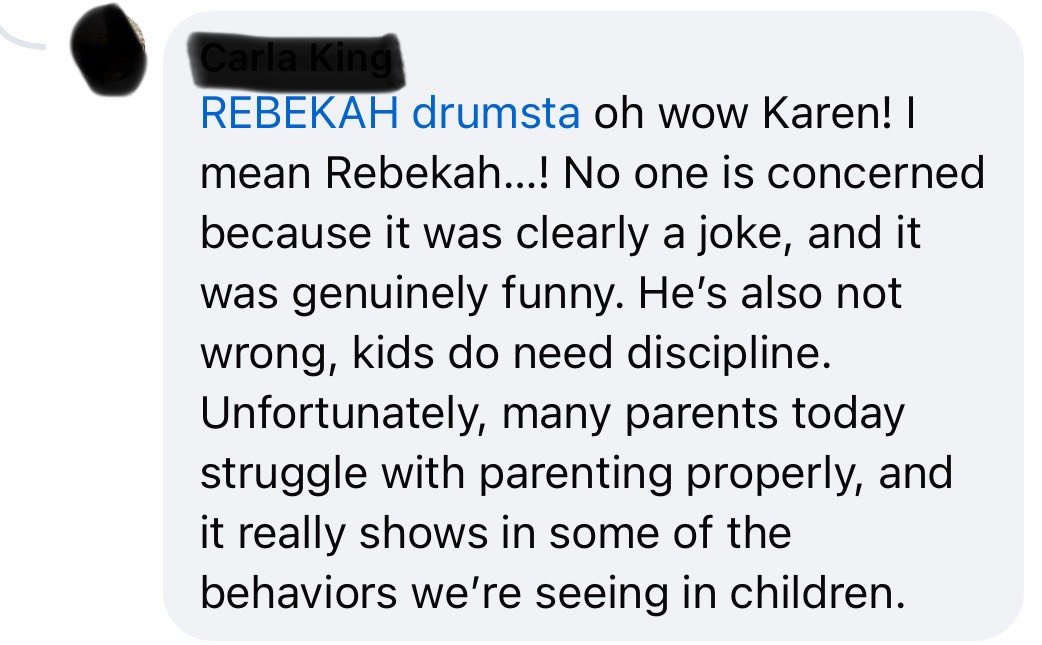
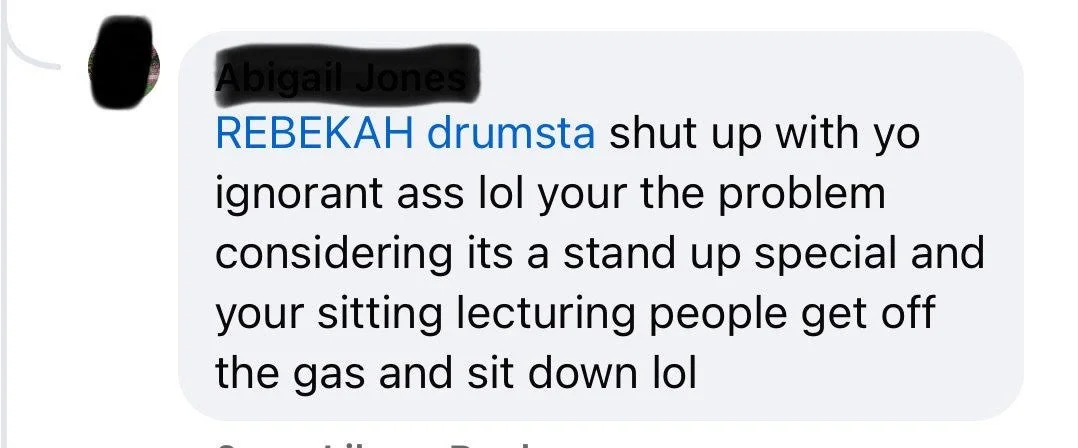
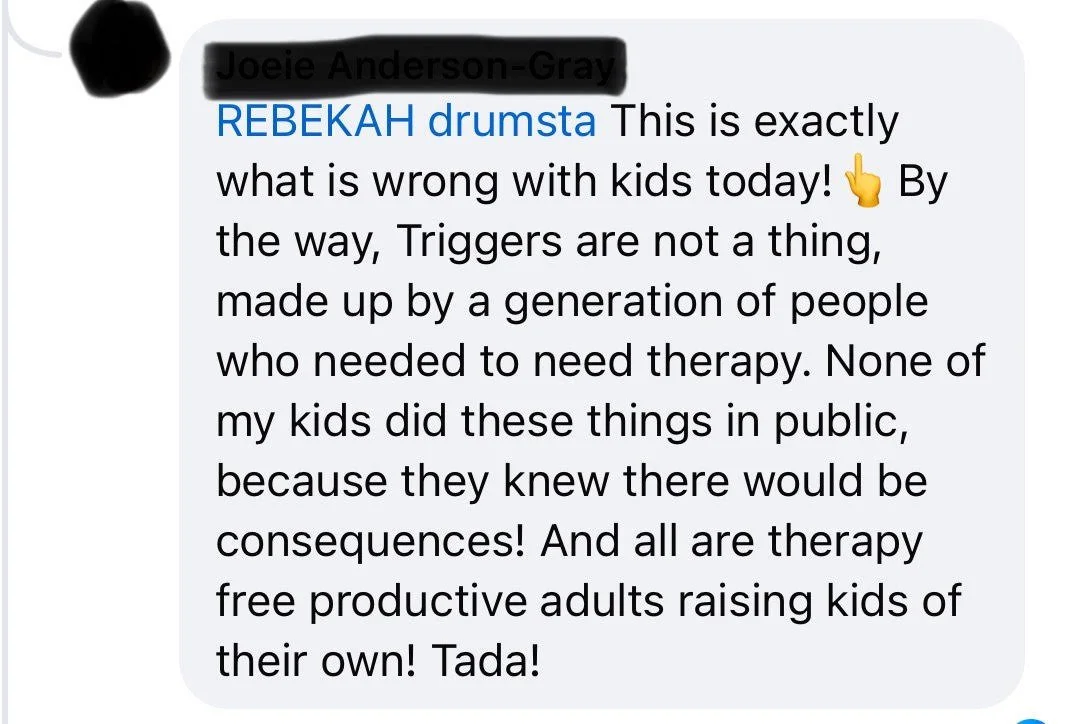
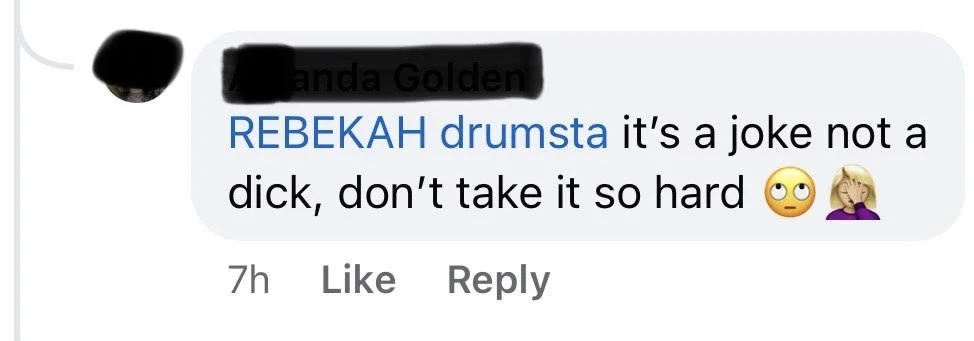
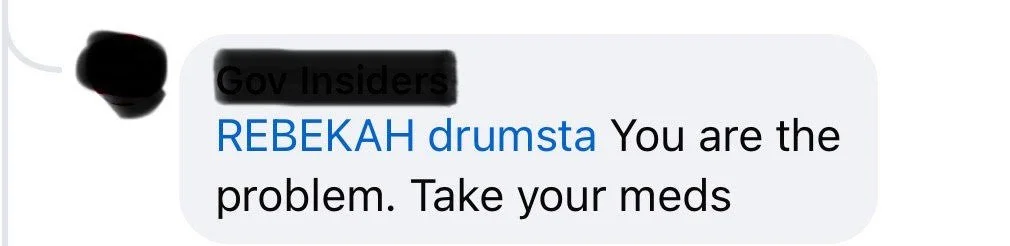
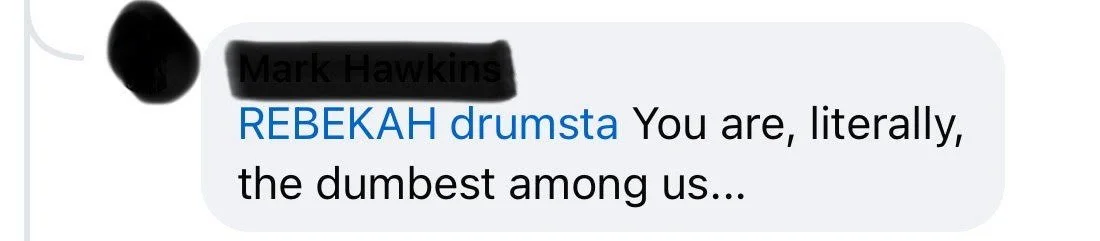
The replies to my feedback were sadly predictable: snark, defensiveness, and the “it’s a joke” and “he’s a comedian” lines. The people pushing back were nurses, investors, teachers, moms, Christians—ordinary Americans. That’s the point: this isn’t a fringe problem. It’s mainstream.

The very next day my husband texted me a photo from a store: a sweatshirt that read, “I’d drop kick a child for a Dr. Pepper.” That’s not edgy humor. That’s a casual threat dressed as a joke. Children feel in their souls how they’re treated. They know, intuitively, if they are valued. When adults who are supposed to protect them normalize threats, we teach children that their bodies and dignity are negotiable.
We should pay close attention to when power laughs at harm, culture learns to laugh too.
Screenshots of some of the replies to my comment are shown here. There was no editing made to the comments. Name and profile photo have been covered protect identity.
Christian Theology That Calls Us to Better
Joking about harming, hurting or hitting someone is not funny—especially when Christians claim theologies such as: “When you do it unto the least of these, you do it unto me.”
Examples from Christian theology:
Imago Dei (Genesis 1:27): Every child is made in the image of God. To harm a child is to dishonor the divine imprint.
Jesus on Children (Matthew 18:1‑6): Whoever welcomes a child welcomes Him. Whoever causes a child to stumble faces severe judgment.
Fruit of the Spirit (Galatians 5:22‑23): Love, gentleness, and self‑control are marks of Christian maturity. Violence or threats to gain power or control, desired behavior or outcome contradicts these fruits.
Shepherd Imagery (John 10:11): Jesus is the Good Shepherd who carries His sheep. Parents are called to shepherd, to protect, to guide, their children.
And here’s the contradiction: the same people who laugh at spanking, smacking, drop‑kicking, or hitting a child are often the ones most loudly wearing the label “pro‑life” or declaring “stop child sex trafficking.” Something isn’t adding up.
What This Exchange Revealed
From that comedian’s reel and the responses that followed, here’s what I observed:
A public figure felt comfortable saying he would hit a child and their audience laughed and clapped at that statement.
People want to feel or be right; they defend cultural norms, beliefs or practices even when those harm others.
There is still widespread confusion about what counts as harm versus hurt, and trauma versus ordinary dislike.
When challenged, many people respond with spite or jabs rather than curiosity.
Standing up for children in a culture that doesn’t view them as equals can get you mocked.
If we want a culture that protects the vulnerable, our punchlines must reflect that, not undermine it.
Closing Invitation: Not a Verdict
This isn’t about canceling comedians or policing humor. It’s about recognizing that comedy is a cultural thermometer. What we normalize in laughter becomes the air our children breathe. I spoke up because I want people to think—not to be shamed, but to pause and consider whether our Christian cultural habits reflect the God we say we follow.
This applies outside of faith spaces too - does what we laugh at mirror the culture we want for our children, our country our lives?
I write from a place of care, not condemnation. I want us to wrestle with beliefs honestly and to choose gentleness over easy jokes that cost children, survivors and others their safety.
Contemplative Questions
When you hear a joke about hitting a child, what is your first emotional response and why?
How does your reading of scripture or religious beliefs shape your instincts about discipline and protection?
Who benefits when we normalize threats to children as humor? Who is harmed?
What would it look like for our churches and families to model gentleness and self‑control instead of quick punishment?
If a child bears the image of God, how does that change the way we speak about and treat them—even in jest?
What one small change could you make this week to model gentleness for a child in your life?
Who in your community needs protection, and how can you be an advocate rather than an apologist for harmful norms?
How will you teach the next generation what dignity and safety look like—through words, actions, and the jokes you laugh at?
Is pro-life the same as pro-child?
For further reference and research:
Religious Attitudes on Corporal Punishment - Children’s Health Care
Strongwilled - by Krispin and D.L. Mayfield
The Myth of Good Christian Parenting - Marissa Franks Burt

This article is not intended to treat or diagnose any condition.
Rebekah is not a licensed therapist or clinician. Any advice or opinions given on this site are strictly her own observation and insights based on personal experiences and study. It should in no way take the place of professional assistance.